

A 2025 University of Oregon study published in the American Journal of Physiology found that soaking in a hot tub raised core body temperature more effectively than both traditional saunas and infrared saunas, triggering stronger cardiovascular, immune, and blood flow responses. That's on top of what hot tub owners already know from experience: less back pain, better sleep, faster recovery after workouts, and the kind of daily stress release that's hard to replicate any other way. The science is catching up to what 20 minutes in warm water at the end of the day has always felt like.
This guide covers the specific health benefits backed by current research, how hydrotherapy jets amplify those benefits beyond a simple warm bath, and what to look for in a spa if you're buying primarily for wellness.
Pain relief and muscle recovery through hydrotherapy
Warm water does three things at once for pain: it increases blood flow to damaged or tight tissue, it reduces the gravitational load on joints through buoyancy, and it relaxes muscles that are guarding against pain. That combination is why physical therapists have used water therapy for decades and why a 2021 clinical study found hydrotherapy more effective than standard physiotherapy for improving pain, stiffness, and strength after knee surgery.
Where a hot tub goes beyond a warm bath is the jets. Targeted water pressure against specific muscle groups creates a mechanical massage effect that breaks up tension and increases localized circulation. But the quality of that massage depends entirely on how the jets are designed and placed.
Can a hot tub help with back pain?
Back pain is the number one reason people start researching hot tubs, and it's where jet engineering matters most. A spa with 40 generic jets pointed randomly at the shell won't do much for a chronically tight lower back. Passion Spas worked with physiotherapists to position every jet on soft tissue, avoiding bone and targeting the muscles and tendons that actually respond to hydrotherapy.
The Aqua Rolling Massage system is a good example of this philosophy in action. Instead of static jets blasting one spot, water pulses upward through a sequence of jets built into the bucket seat, working from the lumbar region to the base of the neck. Passion Spas developed it to replicate the rolling pressure of a masseuse's hands. It sounds like marketing until you sit in it, and then you understand why it exists. The Solace ($8,605, 5 seats, 58 jets) and the Joy ($9,995, 7 seats, 70 jets) both feature this system alongside dedicated lumbar support zones and Intense Therapy jets for the shoulders.
For people with arthritis or joint stiffness, the buoyancy factor alone can be transformative. Water supports roughly 90% of your body weight, which means your spine, hips, and knees experience almost no compression while you soak. Combined with the warmth reducing inflammation and the jets promoting circulation, a 20-minute session can provide hours of relief that no pill matches.
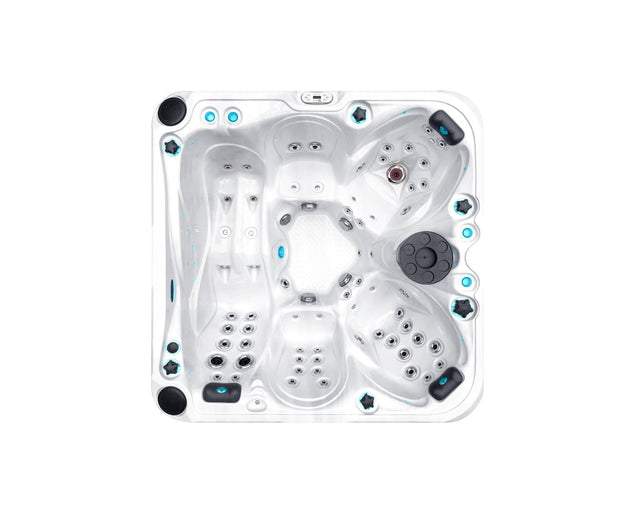
Solace
Better sleep: how a nightly soak resets your body clock
If you've ever fallen asleep faster after a warm bath, you've experienced thermoregulation in action. Your body's core temperature naturally drops in the hours before sleep, signaling melatonin production and triggering drowsiness. A hot tub accelerates this process. When you soak in 100-102°F water, your core temperature rises. When you step out, it drops more rapidly than it would on its own, and that amplified drop tells your brain it's time to shut down.
A 2023 review of multiple studies confirmed what sleep researchers had suspected: regular warm-water immersion before bed measurably improves sleep quality scores. The effect is strongest when you soak for 15-20 minutes and head to bed within about 90 minutes of getting out. For Texans dealing with hot summer nights where AC alone doesn't quite settle you down, this routine works year-round.
Several Fonteyn Houston customers have mentioned this unprompted. One Happy owner wrote that they'd been sleeping noticeably better since making evening soaks a routine. That tracks with what the research shows: consistency matters more than duration. A short nightly soak delivers better sleep results than one long weekend session.
Cardiovascular health and immune response
The 2025 University of Oregon study is worth paying attention to because it didn't just measure subjective feelings. Researchers tracked core temperature, blood pressure, heart rate, cardiac output, immune cell populations, and inflammatory biomarkers across hot tubs, traditional saunas, and infrared saunas. Only hot-water immersion produced measurable changes in inflammatory cytokines and immune cell levels.
Are hot tubs better than saunas for your health?
The key finding was that water immersion prevents your body from cooling itself through sweat, which pushes core temperature higher than dry or radiant heat achieves. That larger thermal stimulus drives stronger cardiovascular adaptation: blood vessels dilate, cardiac output increases, and blood pressure drops. Over time, repeating this stress in moderation trains the cardiovascular system in ways that mirror some benefits of mild exercise.
Christopher Minson, the professor leading the research, noted that heat therapy provides an option for people who can't or won't exercise regularly. That's not a replacement for physical activity, but for someone recovering from surgery, managing a chronic condition, or struggling to maintain a workout routine in the Texas heat, a hot tub provides genuine physiological stimulus.
Stress reduction and the daily wellness routine
Cortisol, the body's primary stress hormone, drops measurably during warm-water immersion. Hydrotherapy jets simulate massage, which triggers endorphin release. The combination of warm water, reduced gravity, and rhythmic jet pressure creates conditions that shift your nervous system out of fight-or-flight mode and into a parasympathetic (rest and recovery) state.
That's the clinical version. The real version is what it actually feels like to step onto your patio at 9 PM, lift the cover, and sink into 102-degree water with the LED lighting on and nobody asking you for anything. There's a reason hot tub owners consistently report that the spa becomes the most-used feature of their home within the first month. It's not the novelty. It's that it works, and it only takes 15 minutes.
The Relax ($6,495) was designed around this daily-use philosophy. Seven seats with two different lounger heights, so both you and your partner find a natural position without adjusting anything. The Synergy Water Maintenance System keeps the water clean around the clock with minimal chemical input, which means there's no 20-minute prep ritual standing between you and the water. You test, you adjust once a week, and the rest of the time you just get in. The Recharge ($5,999) offers the same low-maintenance system in a round 5-person design that fits smaller patios without sacrificing the therapeutic experience.
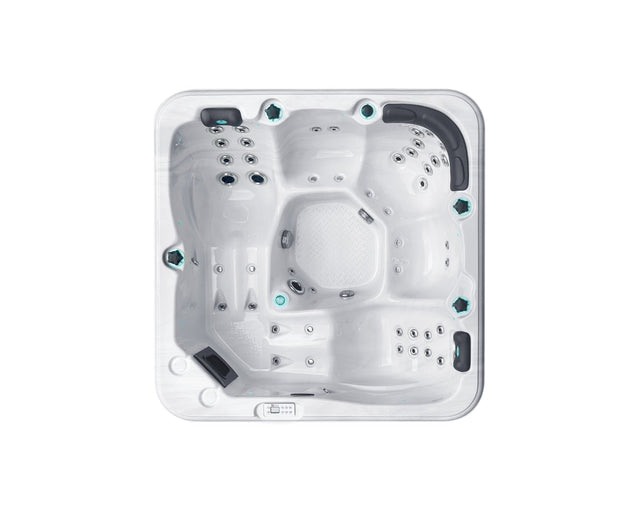
Relax
Matching a spa to your wellness goals
Not every spa delivers the same therapeutic value. If you're buying primarily for health benefits, here's what to prioritize.
| Wellness goal | What to look for | Recommended model |
|---|---|---|
| Back and joint pain | Aqua Rolling Massage, lumbar support jets, deep bucket seats | Solace - $8,605 |
| Post-workout recovery | High jet count, Intense Therapy Zone, multiple massage types | Joy - $9,995 |
| Sleep improvement | Comfortable lounger, quiet operation, consistent temperature | Relax - $6,495 |
| Daily stress relief | Low-maintenance water care, ergonomic seating, compact size | Recharge - $5,999 |
| Couples wellness | Dual seats with individual jet zones, mood lighting, Bluetooth | Renew - $5,499 |
Energy efficiency matters for wellness too, because a spa you can't afford to run daily won't deliver daily benefits. Hybrid Heating recaptures friction heat from the circulation pump, keeping monthly electricity at $30-$60 in Texas. That's the cost of a single professional massage, except the spa is available every night for 15 to 20 years.
At Fonteyn Houston's warehouse, you can sit in every model and feel the jet placement against your own back. What works for lower back tension is different from what works for shoulder stiffness, and the right seat position makes all the difference.
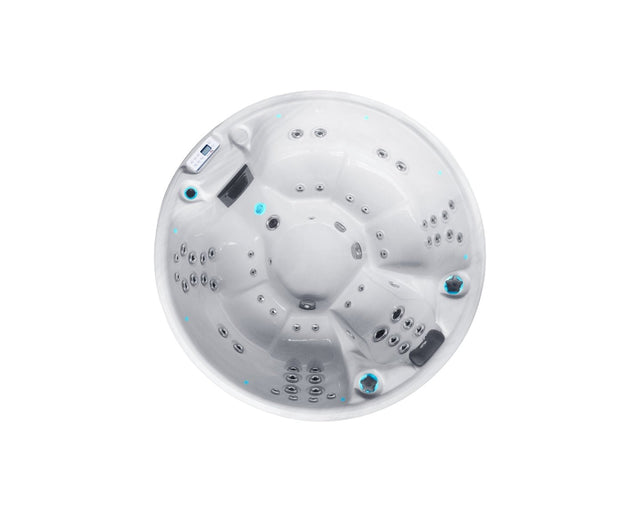
Recharge
Frequently asked questions
How often should you use a hot tub for health benefits?
Are hot tubs better than saunas for your health?
Can a hot tub help with back pain?
Do hot tubs help you sleep better?
Is a hot tub worth the investment for health reasons?
Experience the difference at Fonteyn Houston
Sit in every model. Feel the jets against your back. Our team will help you match the right spa to your body and your wellness goals, at warehouse pricing you won't find at a dealer.